
Author Guidelines Editorial Board Peer Review Reviewers Focus and Scope Publication Ethics Copyright Notice Author(s) Fee Plagiarism Policy Archiving Open Access Policy Copyright Policy
Archives
-
First Issue
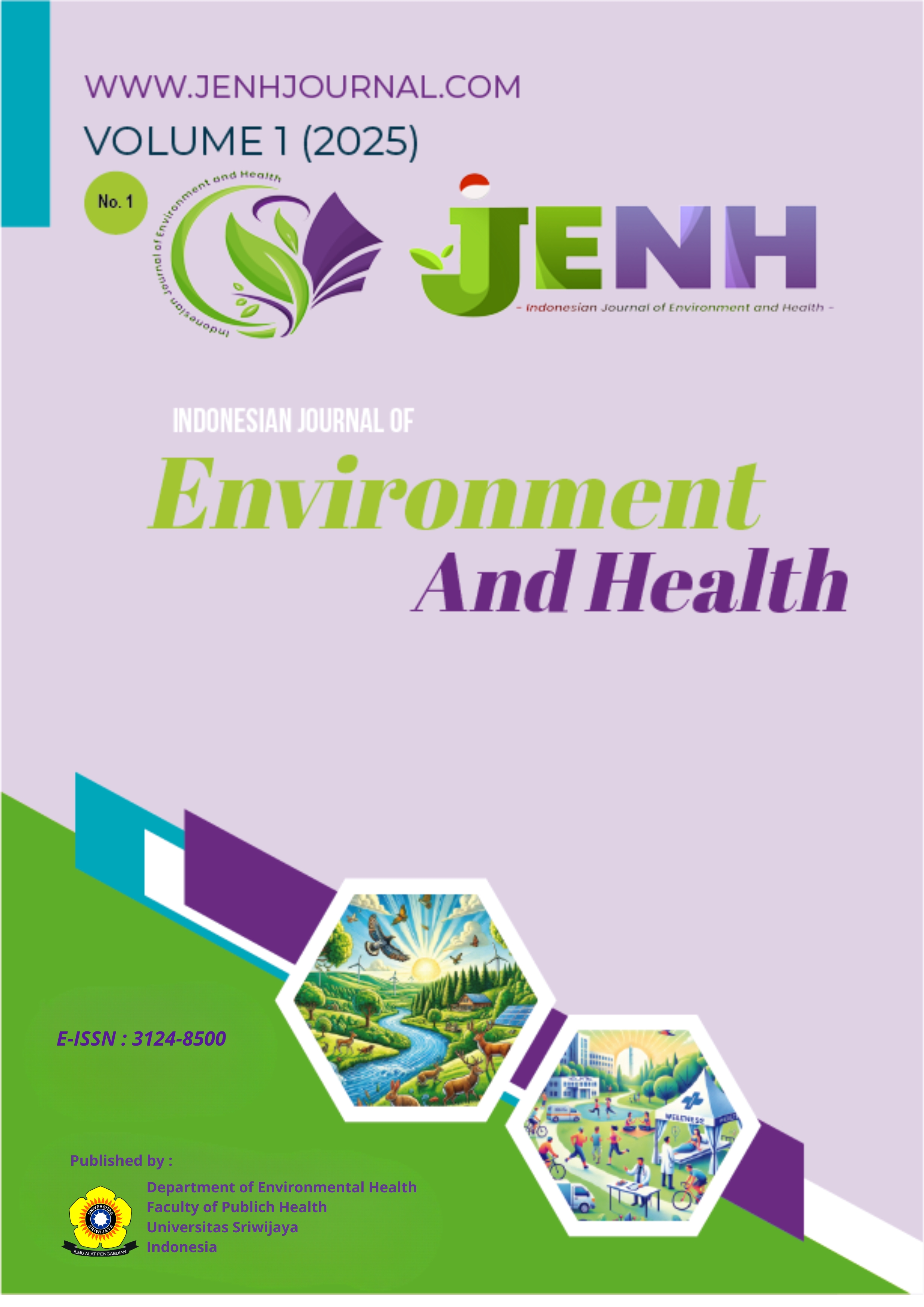
Vol. 1 No. 1 (2025)This journal issue presents a collection of studies addressing diverse public health and environmental health challenges in Indonesia. The articles explore critical topics such as the assessment of dug well water quality near landfill areas, the relationship between maternal personal hygiene and diarrhea incidence among toddlers, the influence of environmental sanitation factors on child health, and the determinants of acute respiratory infections in wetland urban settlements. In addition, the issue highlights adolescent knowledge and attitudes toward pictorial health warnings on cigarette packaging. Collectively, these studies provide valuable scientific insights into environmental sanitation, water quality, respiratory health, communicable disease prevention, and health behavior, contributing to evidence-based strategies for improving community health and sustainable public health practices.
-
December
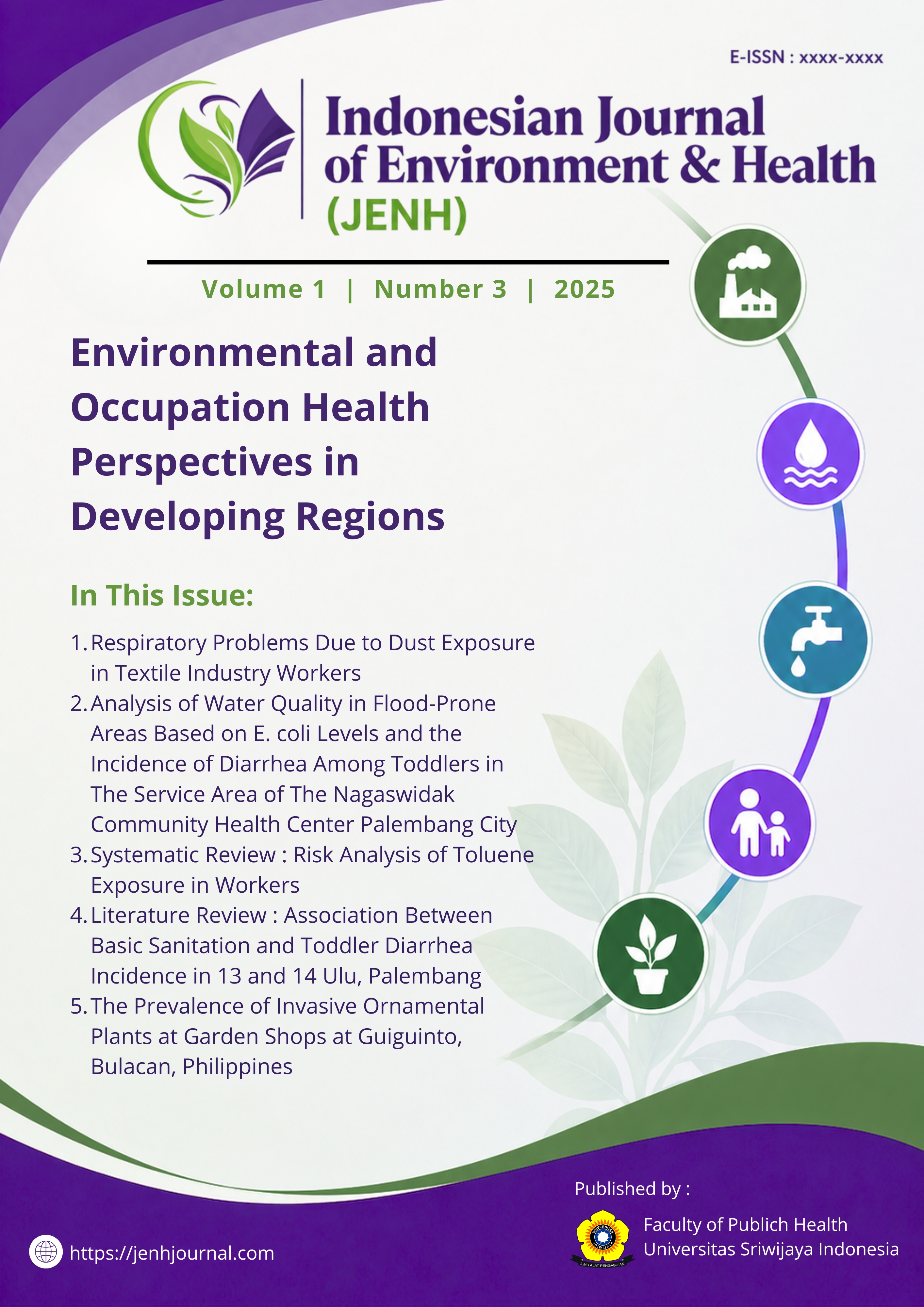
Vol. 1 No. 3 (2025)These five studies collectively highlight the complex interplay between environmental conditions, occupational exposures, and public health outcomes in diverse community settings. They examine how dust exposure in the textile industry contributes to respiratory problems among workers, while chemical hazards such as toluene pose additional occupational health risks. At the community level, the research emphasizes the critical role of water quality, particularly E. coli contamination, in influencing the incidence of diarrhea among toddlers in flood-prone areas. This is further reinforced by findings on the association between basic sanitation and diarrheal cases in vulnerable urban populations, underscoring the importance of improved sanitation infrastructure. Complementing these human health concerns, the presence of invasive ornamental plants in garden shops reflects broader ecological challenges that may indirectly impact environmental sustainability and public well-being. Together, these studies underscore the need for integrated approaches that address environmental health risks, promote safe occupational practices, and support sustainable community development.
-
August
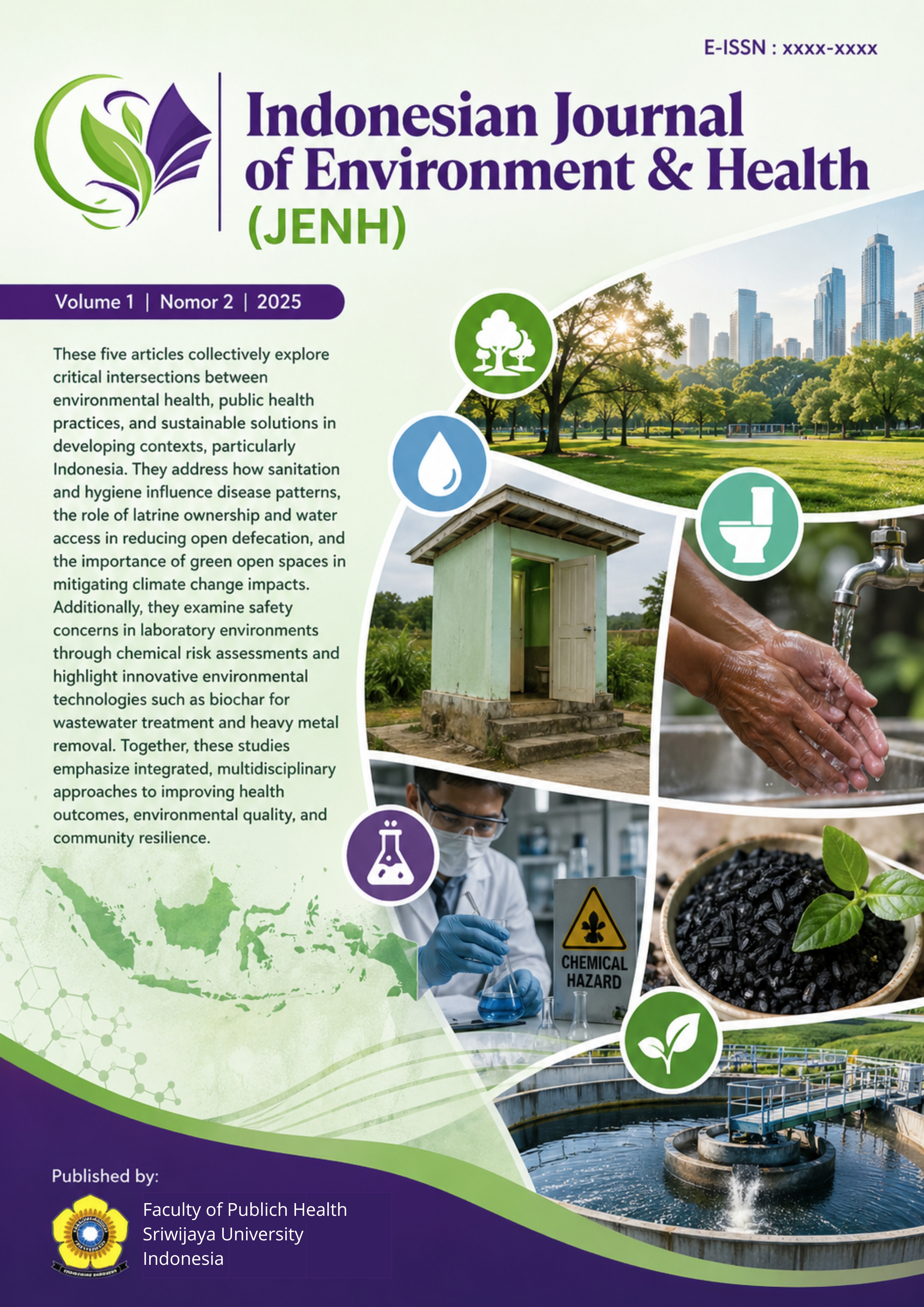
Vol. 1 No. 2 (2025)These five articles collectively explore critical intersections between environmental health, public health practices, and sustainable solutions in developing contexts, particularly Indonesia. They address how sanitation and hygiene influence disease patterns, the role of latrine ownership and water access in reducing open defecation, and the importance of green open spaces in mitigating climate change impacts. Additionally, they examine safety concerns in laboratory environments through chemical risk assessments and highlight innovative environmental technologies such as biochar for wastewater treatment and heavy metal removal. Together, these studies emphasize integrated, multidisciplinary approaches to improving health outcomes, environmental quality, and community resilience.





 .
.